Why Is My Hot Water System Running Out So Fast? (Brisbane Homeowner Guide)
The Complete Homeowner Guide to Hot Water System Faults & QLD Regulations
Few household issues cause immediate disruption like a failing hot water system. Whether your shower suddenly runs out of hot water in minutes, the water pressure has dropped, or you are noticing strange noises coming from your utility closet, hot water faults require prompt attention.
However, diagnosing the issue is only the first step. In Queensland, plumbing and drainage work is tightly regulated to protect public health and property infrastructure. This comprehensive guide breaks down the most common hot water system faults, troubleshooting steps you can safely perform, and the precise legal requirements governing repairs and replacements in Brisbane.
Why Is My Hot Water System Running Out of Hot Water?
When a hot water unit underperforms, it generally stems from one of four primary mechanical or electrical failures. Understanding how your specific unit functions can help narrow down the root cause.
1. Heating Element or Thermostat Burnout (Electric Systems)
Electric storage hot water systems typically contain two heating elements: an upper element and a lower element.
The Lower Element: Does the bulk of the heavy lifting, heating the cold water as it enters the bottom of the tank.
The Upper Element: Acts as a booster to heat the top portion of the tank when hot water demand is high.
Over time, hard water sediment and mineral scale accumulate at the base of the tank. This sediment blankets the lower heating element, causing it to overheat and burn out. When the lower element fails, only the upper element functions. Consequently, only the top third of your water tank is heated, causing your hot water supply to run out in a fraction of its usual time.
2. Faulty Tempering Valves and Legal Temperature Limits
If you have plenty of water volume but it feels lukewarm or inconsistent, the culprit is often a failing tempering valve.
To prevent the growth of deadly Legionella bacteria, the Queensland Building and Construction Commission (QBCC) enforces strict temperature guidelines:
System Location | Required Temperature | Purpose |
|---|---|---|
Inside the Storage Tank | Minimum 60°C | Thermally kills and prevents Legionella bacteria growth. |
At the Tap / Shower | Maximum 50°C | Formally limits delivery temperature to prevent severe scalding. |
The tempering valve is a mechanical mixing valve located outside your tank. It blends a precise amount of cold water with the 60°C tank water before it reaches your taps. When the internal thermal element inside the tempering valve wears out, it often defaults to mixing too much cold water, leaving you with lukewarm showers.
3. Continuous Leaking from the Temperature Pressure Relief (TPR) Valve
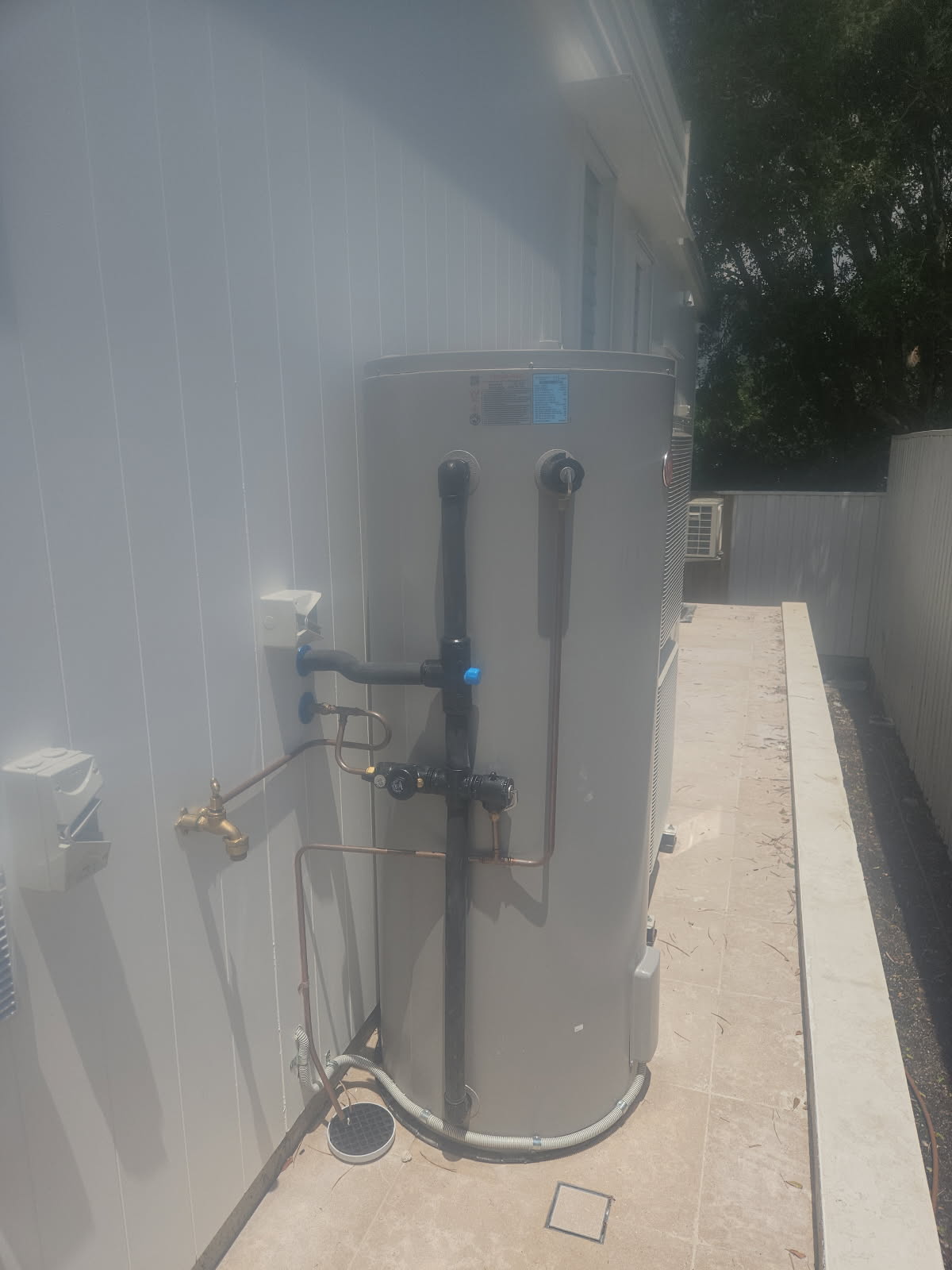
Every storage hot water system features a Temperature Pressure Relief (TPR) valve near the top of the tank. As water heats up, it expands. The TPR valve is designed to vent small amounts of water and steam to release excess pressure, typically dripping slightly during a heating cycle.
However, if water is continuously rushing or heavily dripping from the TPR drain line 24/7, the valve seat may be corroded or stuck open. This constant discharge drains your pre-heated hot water directly into your stormwater or overflow line, forcing your system to constantly heat incoming cold water and driving up your energy bills.
4. Broken Thermocouple or Pilot Light Outages (Gas Systems)
For gas continuous-flow or storage systems, a common point of failure is the pilot light going out or a malfunctioning thermocouple. The thermocouple is a safety sensor that detects whether the pilot flame is lit. If the thermocouple fails or becomes misaligned, it will automatically shut off the gas supply to prevent dangerous gas leaks, resulting in zero hot water production.
Brisbane Plumbing Regulations — What Can You Legally Do Yourself?
Plumbing and drainage laws in Queensland are among the strictest in Australia. Under the Plumbing and Drainage Act 2018, work is categorized into four tiers: Permit, Notifiable, Minor, and Unregulated work.
According to the Brisbane City Council Plumbing and Drainage Guidelines, unlicensed individuals are strictly limited to unregulated work.
✅ Permitted DIY Tasks (Unregulated Work)
As a homeowner, you may legally perform the following maintenance tasks without a licence:
Visual Inspection: Checking the outer casing of the tank for rust, corrosion, or pooling water.
Manually Flushing the TPR Valve: Homeowners are encouraged to gently lift the test lever on the TPR valve for 3 to 5 seconds every six months. This flushes away mineral deposits and ensures the valve snaps completely shut.
Replacing Tap Washers: Changing a jumper valve or washer in a standard leaking tap.
❌ Prohibited DIY Tasks (Requires a Licensed Professional)
You cannot legally perform any of the following tasks on a hot water system:
Replacing a heating element or thermostat.
Installing, adjusting, or replacing a tempering valve or thermostatic mixing valve.
Disconnecting or reconnecting any water supply pipes.
Altering gas lines, gas regulators, or electrical wiring.
Engaging in unlicensed plumbing work is a serious offense in Queensland and carries heavy financial penalties under state law. Furthermore, DIY plumbing work completely voids your home insurance policy in the event of water damage or electrical fire.
Understanding the QBCC Form 4 (Notifiable Work)
When a hot water system fails completely and needs to be replaced, the installation cannot simply be completed casually. The Queensland Building and Construction Commission (QBCC) classifies a hot water heater replacement or a new temperature control device installation as Notifiable Work.
What is a QBCC Form 4?
Notifiable work is a regulatory category for plumbing jobs that are too significant to be minor, but do not require a full local government permit or mandatory council inspections beforehand.
When a licensed plumber completes your hot water changeover, they must adhere to a strict legal timeline to register the work:
Step 1 (Job Completion): The licensed plumber safely installs and tests your new hot water unit.
Step 2 (Within 10 Business Days): The plumber is legally required to lodge a Form 4 (Notifiable Work Insurance Notice) and pay the state registry fee directly to the QBCC.
Step 3 (Within 20 Business Days of Lodgement): The plumber must provide a formal, completed copy of this Form 4 to you, the homeowner.
Why is the Form 4 Critical for Homeowners?
Legal Compliance: It proves your hot water system was installed in accordance with national plumbing standards (AS/NZS 3500) and the Queensland Plumbing and Wastewater Code.
Home Insurance: Insurance companies routinely demand a copy of the QBCC Form 4 if you ever lodge a claim for property damage caused by a burst or leaking water cylinder.
Property Sales: When selling a home in Brisbane, building inspectors will check state registries to verify that any plumbing renovations or hot water system changes were legally recorded.
Gas Compliance Certificates: Note that if your system runs on gas, your professional must also provide a separate Gas System Compliance Certificate immediately upon completion, which is governed under a separate legislative framework than the plumbing Form 4.
Summary Troubleshooting Checklist for Homeowners
If you are experiencing hot water issues, follow this safe sequence before calling a technician:
Check the TPR Valve: Is water constantly dumping down the drain pipe? Try lifting the lever briefly to see if it resets.
Examine the Power Supply: For electric systems, check your household switchboard to ensure the dedicated hot water circuit breaker hasn't tripped.
Look for Physical Leaks: Inspect the base of the tank. If water is pooling directly beneath the cylinder, the internal lining may have fractured, meaning the tank requires replacement.
Verify the Gas Supply: For gas units, check if other gas appliances in your home (like a cooktop) are working to rule out a utility supply outage.
Need expert assistance with an underperforming or leaking system? To learn more about standard supply and install pricing or system upgrades, visit our Hot Water Services hub page. The team at MSV Plumbing Services provides fully compliant, licensed hot water repairs and installations across Brisbane. Every eligible changeover is safely registered with the QBCC to give you complete peace of mind. Please visit our Contact Us page to speak directly with a local professional.
Disclaimer:The information provided in this article is intended for general informational and educational purposes only. It does not constitute definitive technical, legal, or plumbing advice for any specific property or situation. While managing minor plumbing inconveniences can sometimes wait, active burst pipes, structural leaks, and sewage overflows present serious property damage, electrical, and biohazard health risks.
Always prioritize personal safety; if you suspect an issue poses a threat to your health, safety, or property integrity, isolate your water supply immediately if safe to do so, and consult a qualified professional. MSV Plumbing Services and its technicians accept no liability for actions taken by individuals attempting DIY diagnostics or repairs based on the content of this article. Always verify that your attending tradesperson holds a current, valid QBCC license before work commences.